
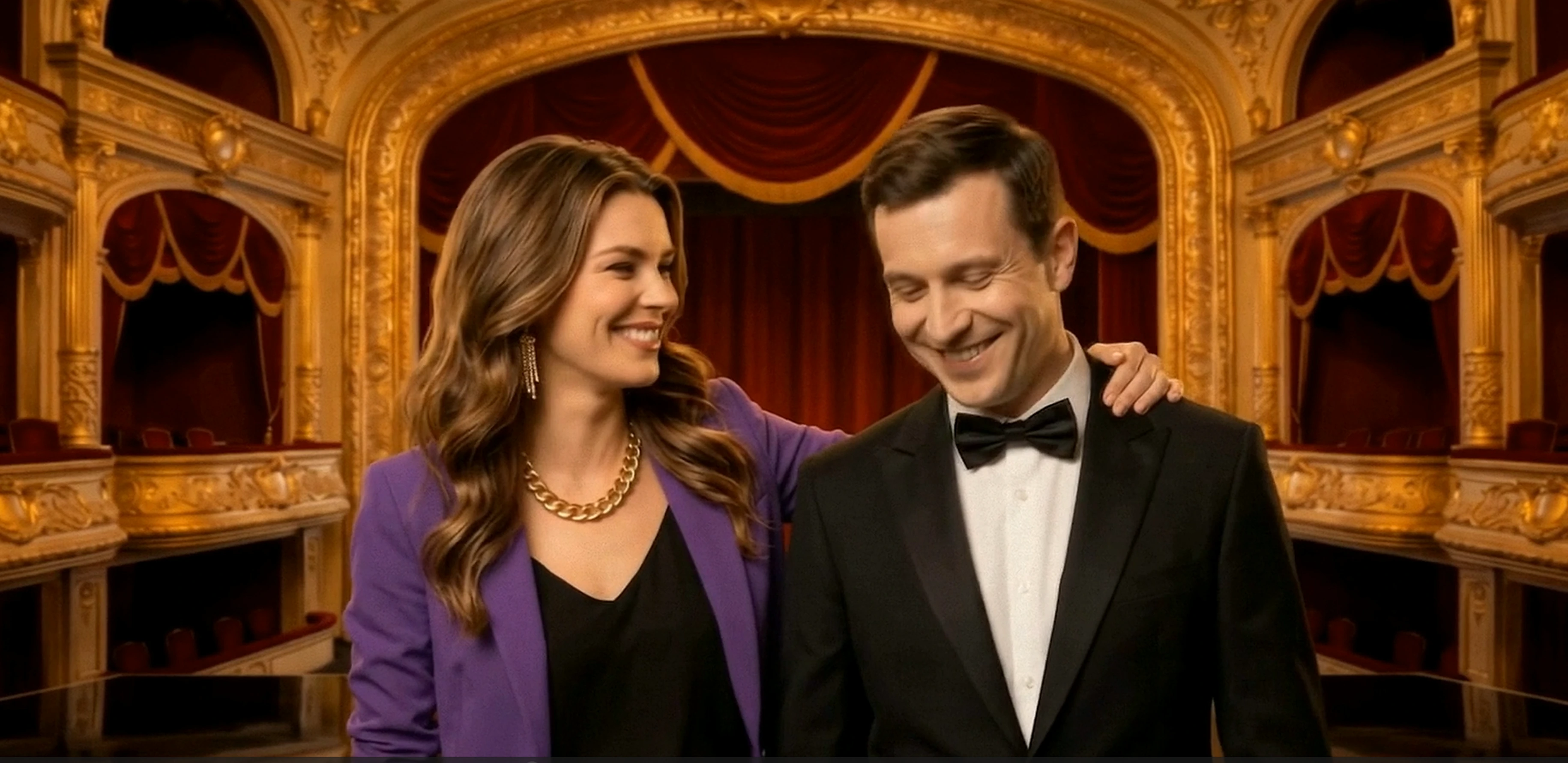
Every question changes the scene.
At the wine table, the guest decides where the conversation goes. Here’s what Dana brings on screen for four different questions.

“What wine would you recommend with lobster?”
Dana recommends a Chassagne-Montrachet. The guest sees the bottle as she names it.

“Where’s it from?”
A Burgundy map and the bottle label show where the grapes grow and where Joseph has his cellar.

“What does it taste like?”
Chardonnay grapes and tasting notes appear as Dana describes orchard fruit, peach, and a hint of pastry.

“Why does it go so well with lobster?”
Dana explains how the wine’s freshness balances the butter. When the guest says yes to a bottle, it appears on the order.
The secret is the cue.
Take a closer look at “Where’s it from?” Within that one answer, each sentence cues a change on the map or beside it.


How the AI theatre works.
Dana is the guide. The map and label are props she can bring on stage. The guest has a part, too: a question, a tap, or an interruption can change what happens next.
- Guide · Dana
- Props · map and label
- Guest · conversation controls
Who calls the cue?
The script sets the rules. The Director proposes what to show next. The Stage Manager checks that the item belongs to this Enactment and that the cue still fits the conversation.
When the guest asks where the wine comes from, the map appears as Dana names the village.
The guest can change what’s on stage.
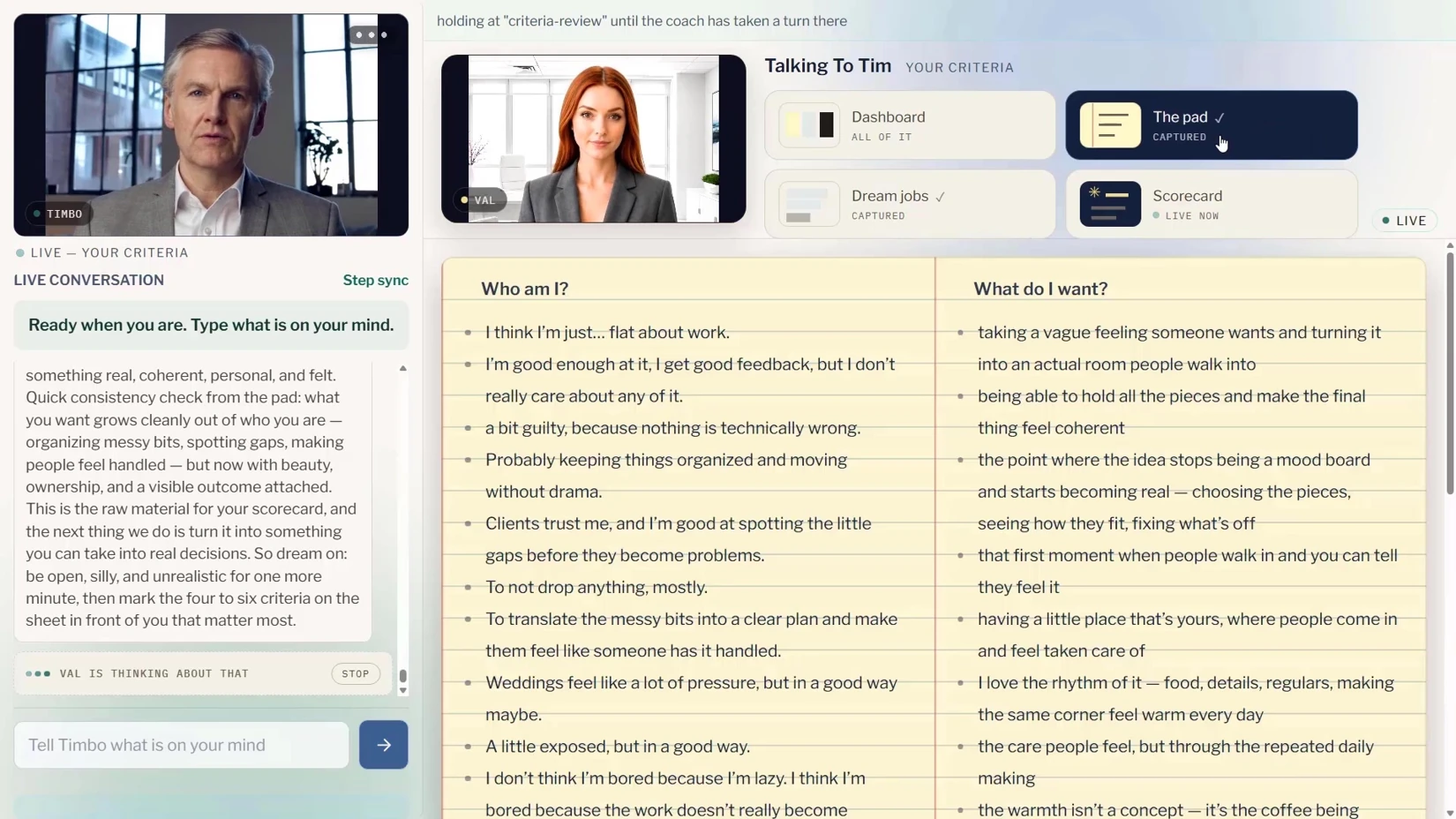
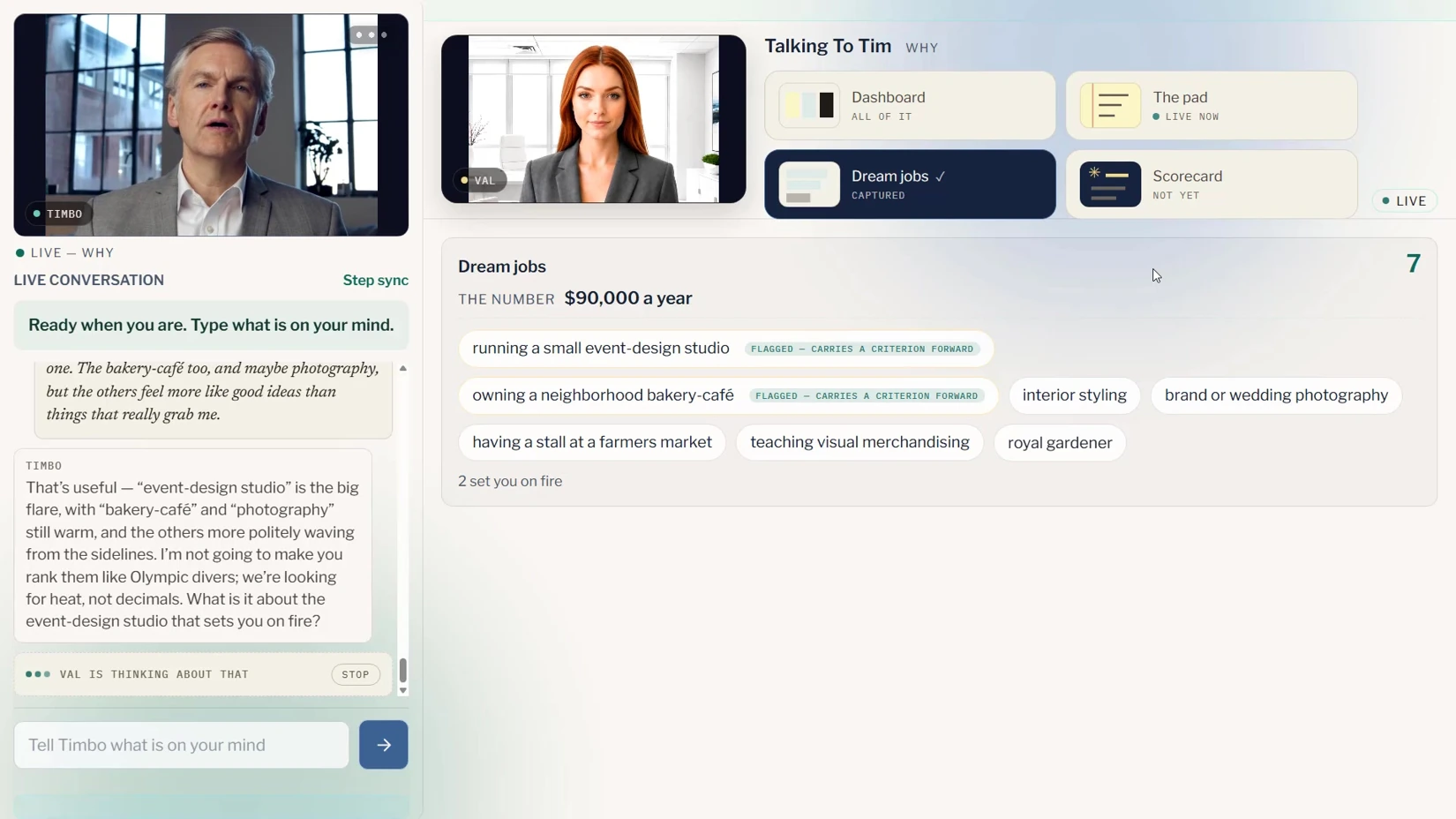
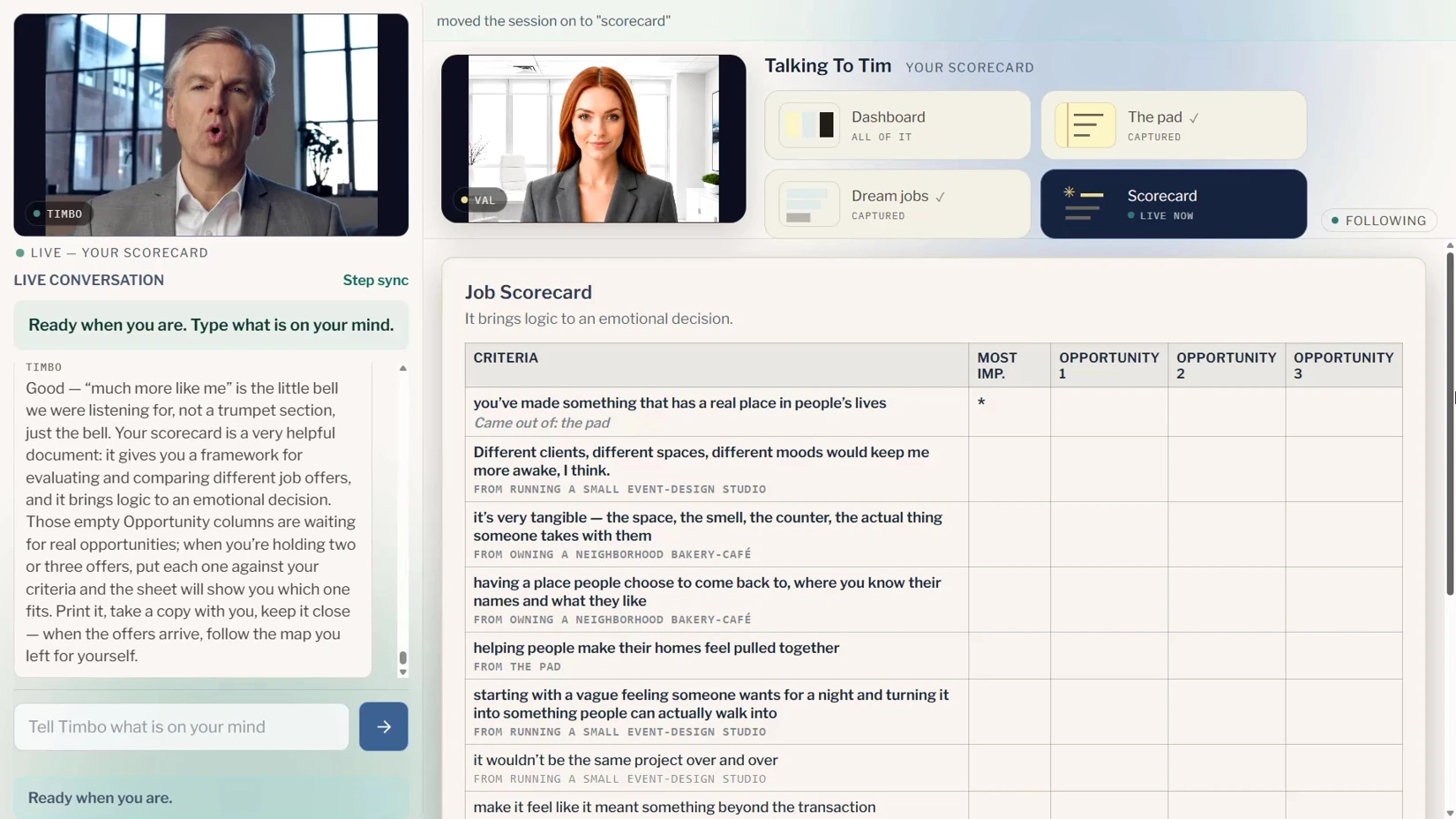
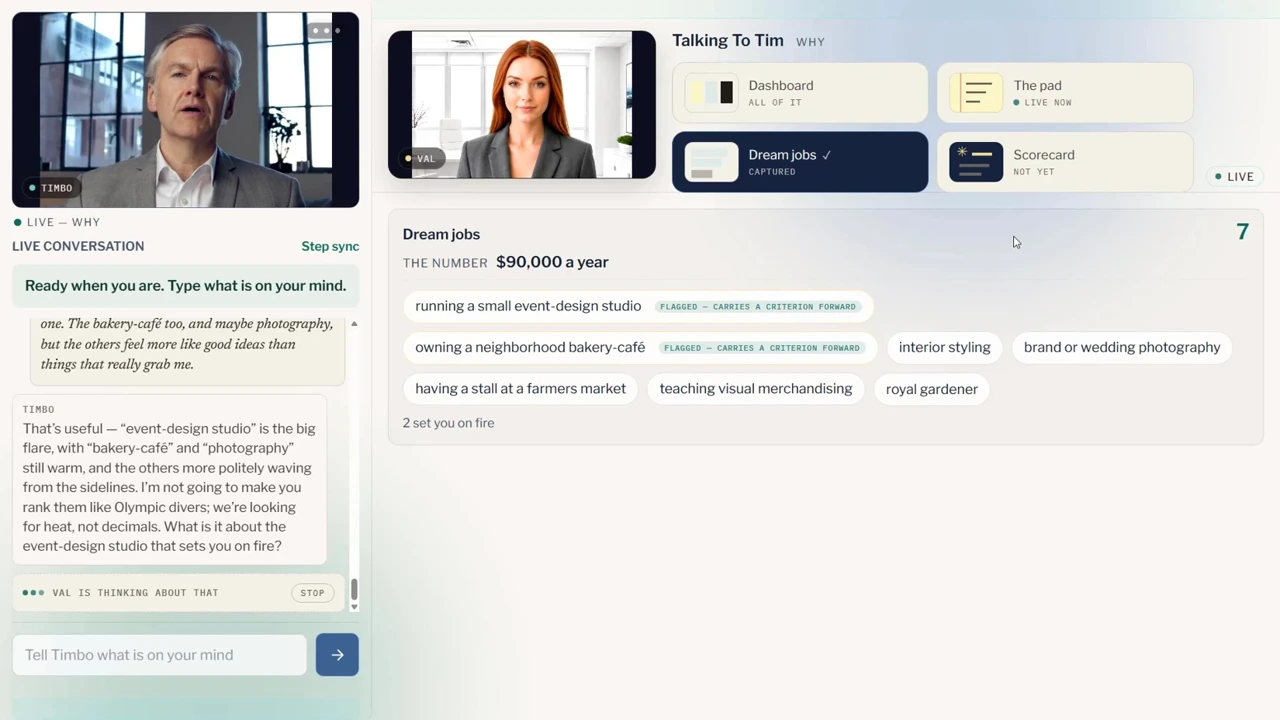
In Talking to Tim, the client and coach work on the same career decision. Their conversation takes shape in three places the client can see and edit.
Some work takes a cast.
A partner for rehearsal
Val plays the client while Tim coaches. In a rehearsal, an expert can follow one answer all the way through: what Val said, what Tim asked next, and what landed on the Pad.
Meet Tim and Val →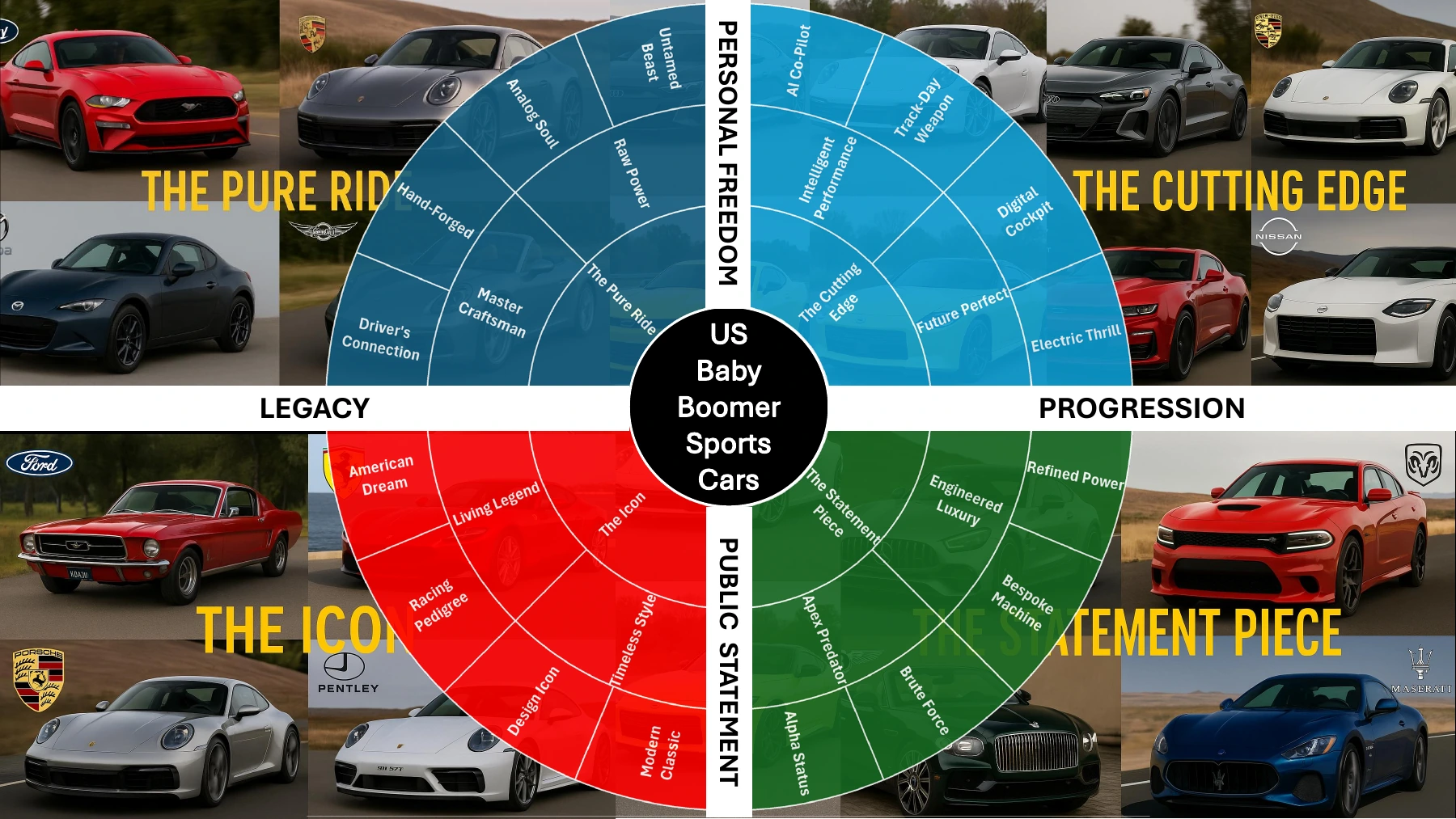
A team for analysis
For a sports-car brief, Semi develops the cultural codes, a reporting agent organizes them, and a reviewer checks the evidence. The strategist can redirect the work between stages.
Follow Semi’s sports-car study →What makes it your expert?
- Will it use my sources?
- You choose the material the guide can draw from. For a document-based Enactment, marked quotations can be checked against the passage they cite. When the source leaves a question open, the guide can say so.
- Will it follow my rules?
- You decide which words must be exact, which steps are required, and where the guide has room to respond. In Taylor’s check-in, a student can ask what a question means. Taylor explains it, then comes back to the same approved question. The assessment rules choose the next one.
- Can it sound and look like us?
- Bring your expert’s instructions, approved sources, and the pictures or tools they use to explain an idea. The guide’s face, voice, and visual style can reflect your organization. XI connects those choices to the models and tools the task calls for.
Inside the Enactor
- Conversation and timing
- Replies can reach the digital human a sentence at a time. A stage cue is tied to the sentence that calls for it, so a map arrives while the guide is talking about the place.
- Sources and controls
- Document lookup can bring a relevant passage into the answer. Software checks proposed actions against the Enactment’s allowed actions and available material before they reach the stage.
- Rehearsal and review
- A team can review what a session asked, showed, or declined. Tim demonstrates simulated-client rehearsal and editable coaching tools. Maya demonstrates guided care-plan review. A pilot selects and tests the capabilities its own task needs.
Why XI built a stage
Our founder’s conviction is that intelligence is meant to be shared and expressed through people and the world around them. That belief shapes what we build. A person should be able to join the conversation, point to something, question it, and change what happens next.
Each production is an Enactment. The guide has a role, the objects on stage carry meaning, and the Enactor keeps them in step. For a publisher or an expert, XI brings that approach to a particular body of work. See how it works in Talking To Tim.

- Digital Human Narrator Dana speaks with the guest and explains what appears on screen.
- Web Chat The guest can type a question or read the conversation.
- Images The Burgundy map and wine label appear as Dana describes them.
- Menu The cards on the right let the guest choose what to explore next.
Hybrid AI keeps the expert in the conversation.
People rarely answer in the precise terms an expert system expects. A rules engine determines the next step. XI connects it to conversational AI so a person can reach that step in their own words.

ConverSage · A psychologist’s next question
For Taylor, XI built the inference engine around the psychologists’ assessment. Each approved question has an ID. When someone asks what a question means, Taylor can explain it and return to that same question. Once the person answers, the engine applies the script’s rules to select what comes next.

MayaMD’s physician-designed symptom checker
Medical doctors designed MayaMD’s comprehensive symptom check. A person describes what they are experiencing in their own words. XI’s conversational layer turns that description into structured input for MayaMD’s rules-based clinical engine, which uses the doctors’ protocols to determine what to ask next.
 Plan
 Drawing
 Scorecard
 Panel