
“Taylor is like my best friend”
That was how one health care worker described Taylor in the Massachusetts General Hospital BeCalm study. What mattered to this participant was being able to talk about difficult things and trust that Taylor would listen without judging them. Participant 02, Table 2.
Of the 38 workers interviewed, 18 spoke positively about the connection they felt with Taylor. Another participant described knowing the figure on screen was an avatar and still finding it easier to talk about something hard to say face to face.
For a health care worker coming off a shift, finding an uninterrupted half hour can be its own hurdle. In BeCalm, a worker could speak with Taylor, type an answer, or come back later. At the end, Taylor offered a personal summary and resources based on the conversation.
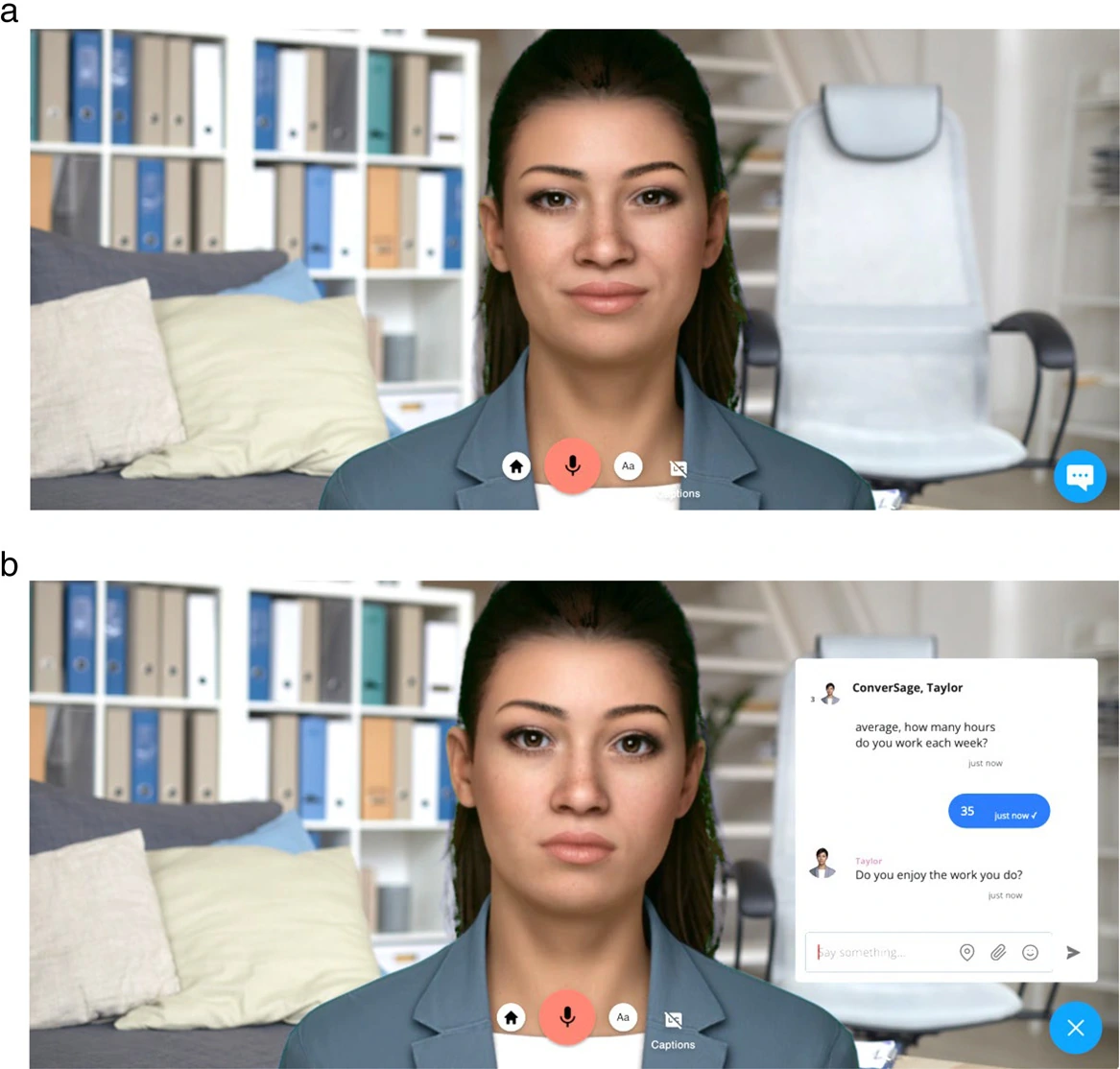
They came back to finish.
Researchers at Massachusetts General Hospital and Harvard Medical School studied BeCalm with 38 health care workers. Every participant completed the assessment. Twenty-four logged in more than once to do it.
- 38 of 38
- participants finished the assessment
- 22 minutes
- average time spent using BeCalm
- 18 of 38
- used both voice and text
Seventeen participants singled out the summary, explanations, or resources as something they valued. One described mentioning trouble sleeping and receiving sleep suggestions based on that answer. What stayed with them was having something specific to try after the conversation.
The researchers also compared BeCalm’s ratings with established assessments. Agreement varied by symptom area and was strongest for mood and occupational burnout. This was a small, single-group study of health care workers. Whether a college check-in improves student outcomes is a separate research question.
Read the 2024 study in the Journal of Medical Extended Reality
After a shift. Between classes.
A hospital worker may want to talk about exhaustion after a shift. A student may be trying to put a difficult semester into words. In the college check-in shown here, Taylor asks, “How much satisfaction would you say you get from being at school, including your coursework and other activities?” The student answers in their own words.
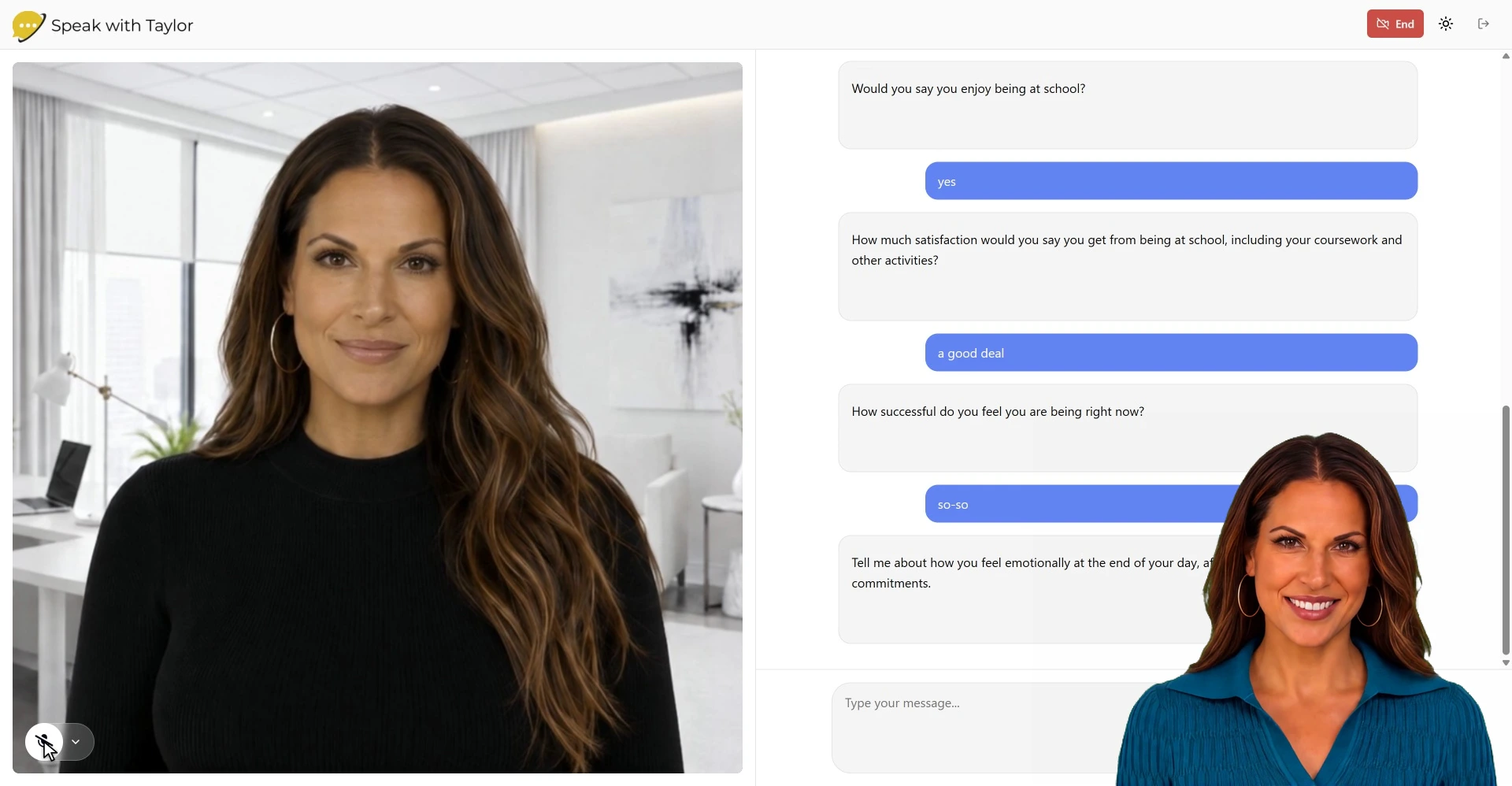
PhD psychologists supply the expertise behind the wellness check. For ConverSage, XI built a custom inference engine that follows their questions, branching rules, and scoring. Conversational AI lets Taylor listen, acknowledge an answer, or explain what a question means. Each assessment question can be traced back to the psychologists’ script.
To adapt Taylor for first responders, for example, a psychology team could use AI to draft wording about coming off a demanding call, review which follow-up questions belong, and choose resources the service actually offers. The experts approve the new script before Taylor uses it.